No products in the cart.

From the field

16 Years of Hope: Walking for Children with Cerebral Palsy

For 16 years, Stichting Why Not? has believed in one simple truth: every child with cerebral palsy deserves a chance to live with dignity, reach their potential and enjoy life. ❤️

Our physiotherapy journey began in 2010, under a mango tree near Utange Primary School. We had no office and no sophisticated facilities. What we did have was a deep passion to support children and their caregivers.

As more caregivers came to us seeking help, new opportunities opened up. In 2011 , we rented a small office and continued providing free physiotherapy every Tuesday to caregivers who are able to bring their children to us.

How it all began

We started this journey with Mama Zainab, who was then working as a Community Rehabilitation Officer with APDK. She had been visiting children with disabilities door-to-door and came once a week to provide therapy.

Over the years, many dedicated professionals have volunteered their time, knowledge and skills. Thanks to their commitment, we have been able to keep this vital service available to families who might otherwise not be able to afford physiotherapy.

And we have seen the difference it can make. ❤️

Physiotherapy changes lives

Physiotherapy has improved the quality of life of many children with cerebral palsy. Some have gained greater mobility, more confidence and a better ability to participate in school and community life.

Clarence Anyanje is one of our living testimonies.

Despite growing up with cerebral palsy, he completed his Bachelor's degree in Project Planning and Management. His journey reminds us of what is possible when children with cerebral palsy receive the right support early enough.

With the right guidance, they can learn, grow, become more independent and work towards achieving their dreams.

More than physical exercises

Our therapy sessions are about much more than physical exercises.

When caregivers come together, they find a safe space where they can share experiences, learn from one another, build confidence and feel less alone.

Our physiotherapists also teach caregivers exercises and techniques they can continue at home with their children.

From time to time, we also provide training and capacity-building sessions on different issues affecting children with cerebral palsy. This helps families gain the knowledge and skills they need to provide the best possible care and support.

The need is still great

Despite everything we have achieved so far, the need for support is still much greater than what we can currently provide.

There are many more children with cerebral palsy and delayed developmental milestones who are still waiting for physiotherapy and other essential support.

That is why we are inviting everyone to join us for:

Why Not Walk 2026

Saturday, 5 September 2026
Start: 7:30 A.M.
Location: Opposite Mwatamba Police Station

Through the #WhyNotWalk , we want to create awareness about cerebral palsy, promote inclusion and raise funds to expand the support we can provide.

With the funds raised, we hope to:

  • ❤️ Increase the number of physiotherapy days
  • ❤️ Provide assistive devices
  • ❤️ Support children who need epilepsy medication
  • ❤️ Train and empower caregivers
  • ❤️ Create greater awareness in the communities where these children live
  • ❤️ Improve our therapy space
  • ❤️ Provide follow-up and support services to children and their families

You can make a difference

Your support can help create a better future for a child.

You can support us by:

  • Making a donation
  • Buying a T-shirt for yourself, a child, a caregiver or a friend for KSh 1,000
  • Renting an exhibition table for KSh 2,500
  • Sponsoring a child for one year for KSh 9,600

Every contribution, big or small, can help a child take another step towards a better future.

Donate and stand with a child with cerebral palsy

PayBill No.: 303030
Account No.: EULN#

Bank transfer

Bank: ABSA KENYA PLC
Name: STICHTING WHY NOT?
Account No.: 2037771352
SWIFT: BARCKENX

You can also support us through credit or debit card..

Whether you join us physically or participate virtually through a donation, your support can help ensure that no child is left behind simply because their family cannot afford the therapy and support they need.

🌍 Walk with us. Give with us. Stand with us.

#WhyNotWalk #CerebralPalsyAwareness #EveryChildMatters #InclusionMatters #PhysiotherapyForAll #StandWithCPChildren #StichtingWhyNot

From the field

School Package

Stichting Why Not Kenya? established a program that guarantees children with exceptional needs can access education without facing prejudice for the past 14 years. To assure that our children receive a top-notch education, the organization partners with both for-paying and non-paying special learning institutions. The organization supports these children by:

  1. Sponsor the education of children in varying levels
  2. Provide stationaries to learners in government special units.
  3. Make routine trips to the schools we collaborate with to assess and talk with the teachers about our children’s development
  4. To guarantee success and positive outcomes, we offer guidance and counseling services to the children and parents we assist
  5. We collaborate with the neighborhood schools to guarantee our kids receive the greatest care.

Wearing a school uniform is an integral aspect of school life, because it contributes significantly to the development of a child's self-confidence and a school-like feeling. Any student in a Kenyan school is required by law to wear a school uniform. For ease of recognition, every school has a distinctive uniform. This is because a child's uniform color can be used to determine which school they attend.

This year, the organization provided 70 learners with a set of uniforms, to support their academic endeavors. Forty-three of the children that received a pair, each are direct beneficiaries of Stichting Why Not Kenya? The remaining 27 learners are from three special units, namely: Utange, Kadzandani, and Concordia. They were also supported with a pair each, due to the good relations we have cultivated over the years.

Because we wanted our learners to look smart and presentable, we employed the services of Coast Tailoring Store, which specializes in creating high-quality school uniforms for various schools in Mombasa and beyond. Stichting Why Not Kenya? has been partnering with this company for several years, and they occasionally give discounts or sponsor some children with uniforms when we place an order.

The company was very thoughtful to provide us with one of their tailors to come to our office, and also visit some of the schools. They took measurements for all the identified learners, so that we didn’t disrupt learning or tire out the parents and children. Since each school has a distinct design and color, our fieldworker collected samples from each to assist tailors in creating the appropriate uniforms.

When preparing the uniforms, the company's tailors took into account the unique needs of each child. For example, they made dresses and trousers for the young children with cerebral palsy who are unable to walk, skirts and blouses for the older girls, and shirts, shorts, and trousers with elastic so the older boys won't have to struggle to button them. The children were happy when they received their uniforms on time, indicating that Coast Tailoring Store did a wonderful job in preparing the uniforms.

You are welcomed to support the work we do to:

  1. Ensure that every year we not only provide uniforms, but also shoes and bags for our kids because they grow out of them so quickly.
  2. Ensure that our special children have access to school supplies and other learning, so that they can engage fully in classroom activities.
A tailor taking measurements a child at Utange special unit
Project update

Occupational Therapy

The Therapy project is one of the most important projects at Stichting Why Not Kenya? This program has been ongoing for 14 years now. It focuses on children as young as 6 months and above with various special needs such as cerebral palsy, delayed milestones, and minor injuries. The program is carried out by occupational therapists from reputable learning institutions in Kenya.

Many children who require physiotherapy services are ranked as level five by hospitals. This service level is not provided for free by the government facilities. Thus not all children are being diagnosed, and one must pay transport cost to get travel to the medical facilities. Therefore the parents are compelled to look for these services locally to save money, which is where we come in.

Stichting Why Not Kenya? is the best location, since we provide the services without charging for it. Our office is in the same neighborhood as where most of these children live. So less travel costs less for those that must travel to our facility. The majority that live nearby just walk a short distance to reach here.

Every Tuesday since the organization's founding in 2010, parents are invited to bring their children for physiotherapy services.

Approximately forty children are being sponsored by us to receive this essential services. The organization hired two occupational therapists with the aid of well-wishers to provide care to any child that is brought to us, without any pre-conditions. Other than the physiotherapy services, the organization also provides:

  1. Diapers are given after therapy to encourage the parents to continuing the treatment
  2. Guidance and counseling services are provided to the parents to empower them
  3. Regular training is provided to the parents accompanied with information and skills necessary to better care for their children
  4. Provide them with assistive devices or put them in touch with our affiliated organizations so they can get assistive devices at no cost.
  5. Provide the parents with food packages whenever possible to boost their dietary needs.

Every good thing has its ups and downs.
Due to a shortage of room, all the children must squeeze into our little office to receive physiotherapy services. Thanks to the Stichting Why Not Kenya? physiotherapy services, the following results were achieved:

  1. Physiotherapy services have enhanced the quality of life for certain children, by improving their capacity to do everyday tasks and gain mobility
  2. Parents have accepted and appreciated their children for who they are
  3. After significant changes and empowerment, some children are now able to attend school
  4. Connecting with other parents and sharing experiences has boosted  their self-esteem.

You are welcome to donate to the organization, to facilitate:

  1. The ability to hire an occupational therapist(s) on a permanent basis to guarantee that these services can be rendered daily rather than just once a week
  2. The ability to provide assistive devices for the children whenever they need them rather than only when the organization can.
  3. The ability to provide the children with comfortable diapers to wear, as most of them can't be potty trained. Some of them require them for the rest of their lives due to the severity of their disabilities.
  4. The ability to plan regular training sessions in order to provide these children the best care possible.

Looking forward to hearing from you.

Mrs. Zainab and Miss. Fransisca attending to children during a therapy session at the Stichting why not office
Project update

Enable Transition

In 2023, Stichting Why Not Kenya and the Dutch board of advisors selected a group of children who had either completed their training or had reached the maximum age of participating in the program.

After extensive discussions with the children and their parents, the idea of providing them with financial support to fund their desired business was formed. This meant that the children would join the Enable Transition project to begin their business journey.

One of our founders, who was moved by the idea, connected us to the Wilden Ganzen Foundation. This foundation is based in the Netherlands. It provides financial assistance to philanthropic organizations throughout the world that want to make a good difference in their communities.

We promptly collaborated and devised an enticing proposal to acquire the funding. In addition to the proposal, we were given a list of standards to meet to boost our chances of receiving funds. Our board performed a key part in completing the most crucial condition, which was to raise ⅔ part of the funds so that we could qualify for ⅓ part of the funds from the Wilden Ganzen Foundation. After meeting all the requirements, we finally received the joyful news for which we had spent many restless days waiting.

We are pleased to report that 20 childrend have begun to benefit from the funding provided by the Wilde Ganzen foundation by:

  1. Participating in training  on business skills
  2. Accessing funds to establish or grow their existing businesses
  3. Regular visits by our staff to follow up, get updates and advice where needed to ensure profitability & continuity of the businesses

The organization hopes that with this project:

  1. Stakeholders can participate in gainful employment
  2. Reintegrate back into their communities with respect
  3. Improve their living conditions and achieve independence

We look forward to sharing more beautiful stories about the childrens' individual journeys toward independence.

Matilda with stakeholders during a business training session at the Stichting why not office
Matilda with a stakeholder during a business visit in Keroport area
Fundraising activities

Clarence goes to university
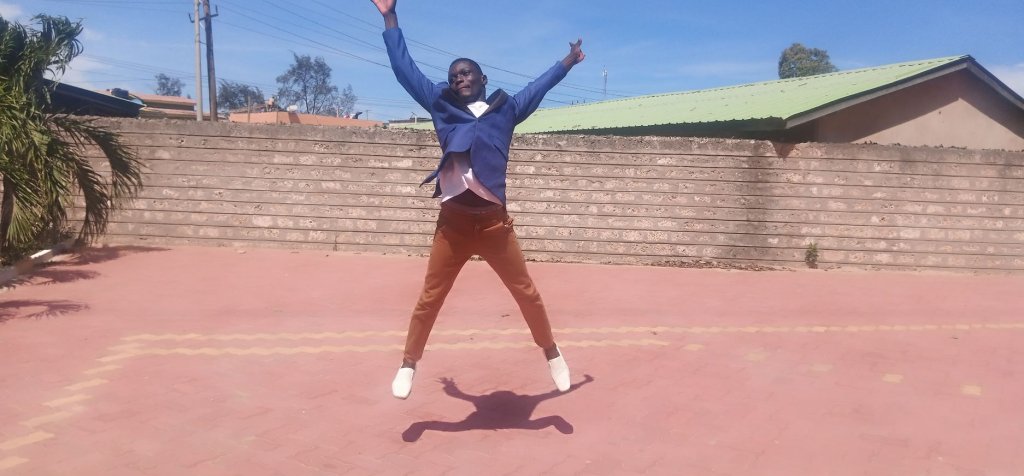
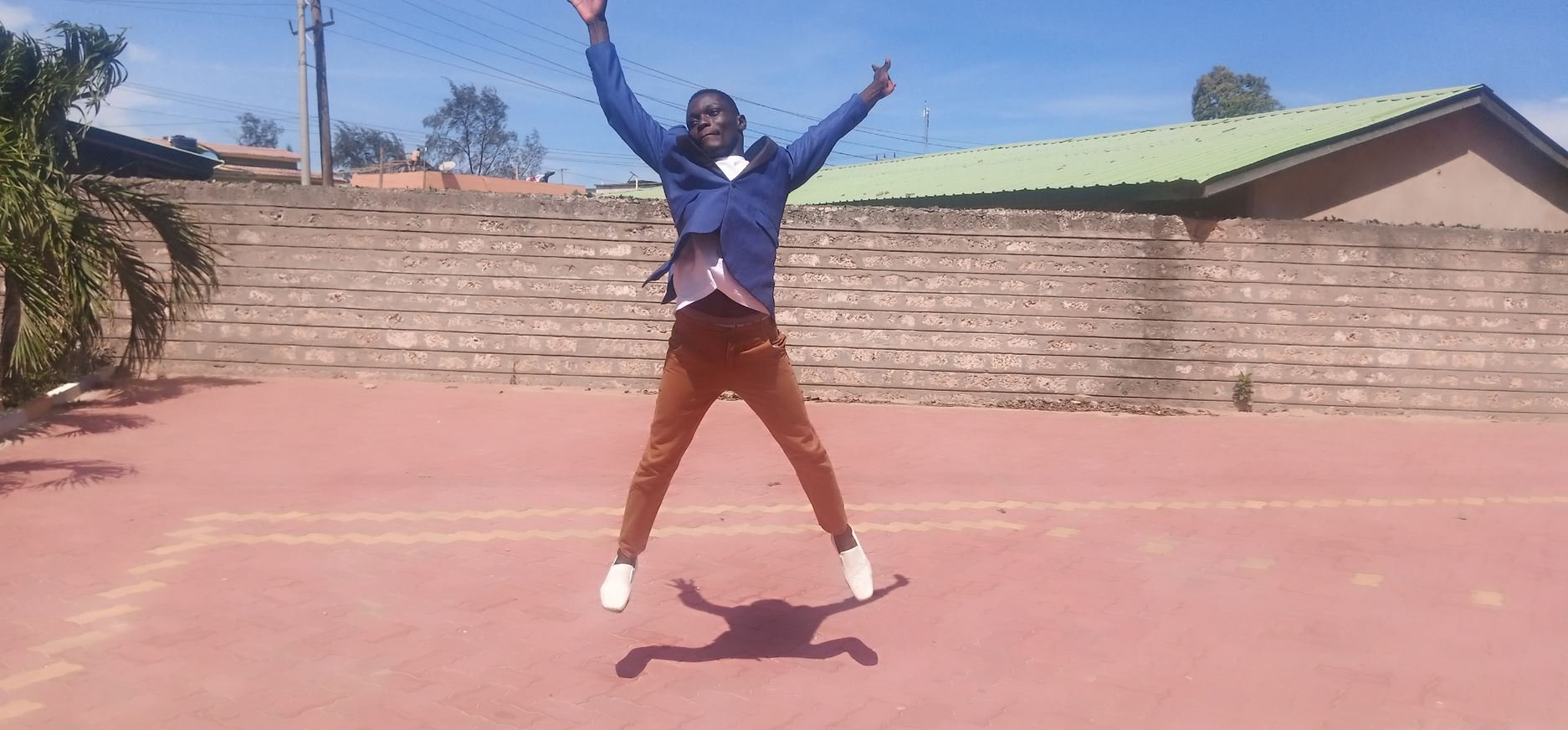
Please meet Clarence Saiffer (23). Clarence is suffering from cerebral palsy. Since 2011, he has been going back to school, thanks to the mediation of WhyNot. And with good results. Today Clarence has his first day at university!

Clarence completed high school with excellent grades, and thus gained direct access to the university. This is a dream for many in Kenya. As the first WhyNot alumnus, Clarence will start his first academic year today. He wants to get a bachelor's degree in project planning management. To celebrate this success, WhyNot organized a surprise party for him and two other students. Clarence was very surprised!

During his primary school stay, Clarence was an outgoing and hardworking boy. He participated in most school activities, also because he did not want to be left out. He was active in drama, poetry, public speaking, debates and even sports. He never shunned public activities, because he is ambitious and wants to do great things. 

After successfully completing primary school in 2017, he was invited to move on to special secondary education. Life was not easy for him there. Due to his cerebral palsy, his spasms increased and he was unable to use his hands to write. That is why the school temporarily provided him with a laptop and he received extra guidance. His teachers motivated him and his parents have always supported him.

With the advent of the laptop, Clarence also began to write and write poems about the things he experienced. In 2020 we helped him set up his own YouTube channel to increase his reach. With his stories and poems, he gives hope and inspiration to other people with special needs. Clarence is now often in demand as a speaker. For example, he contributed to the United Nations International Day and the Cerebral Palsy Day, which draws attention to people living with cerebral palsy.

Due to his writing limitations and the need to do more computer work during college, Clarence started a two-month computer course at Shanzu Teachers College. WhyNot largely pays for this course. In addition, we also want to help him buy his own laptop and the tuition fees that he will have to pay.

Clarence has come a long way in his life. And he has other big plans too: he wants to become an environmentalist to preserve the flora and fauna in Kenya and elsewhere, while also further shaping his passion for poetry. For this he needs our support now more than ever.

Would you like to help Clarence finance his studies, travel and accommodation expenses, laptop and film camera? This requires € 3,500. Any contribution is greatly appreciated. Please use the following link to perform a one-time donation: https://betaalverzoek.rabobank.nl/betaalverzoek/?id=x1J4tBTKQpyQPrMOHpNK4w&qsl_reqcnt=1
Of klik op “word donateur” bovenaan de website om een donatie te doen.
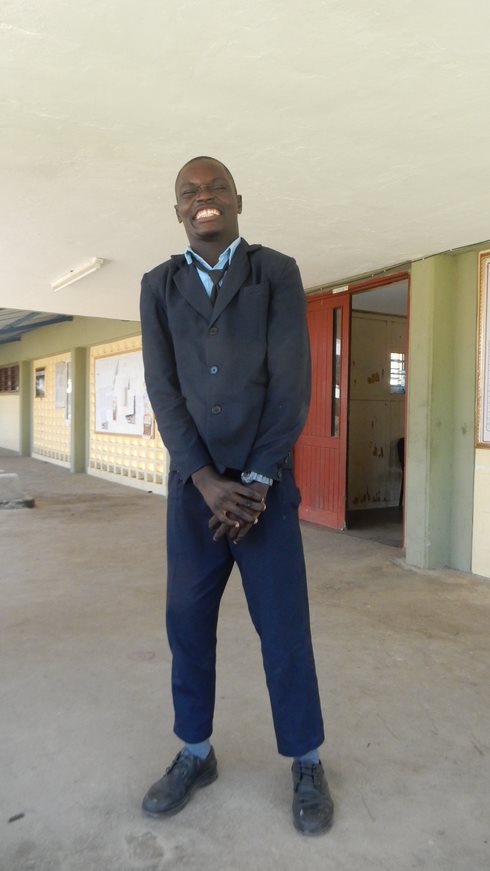
Clarence at his secondary school
Project update

The Story of Dama Kahindi

Since the implementation of the epilepsy program in 2011, Why Not Foundation has grown significantly. It now provides daily epileptic medication for more than 34 children. This is in order to get the condition under control. This is due to the cooperation of the Why Not Foundation and Doctor Muema Mwambu Musyoka, who has a clinic in the Kisauni area in the province of Mombasa. He is a pediatrician and specializes in the management of epilepsy.  

Through his help, Why Not Foundation has been organizing an epilepsy clinic once a month for over 8 years, where all parents meet once a month and receive support by: 

  • Regular health education sessions on common diseases associated with epilepsy
  • One-on-one counseling sessions to better understand their children's condition;
  • Collecting the appropriate monthly epilepsy medication;
  • Free additional personal explanation/information in case of poor health of their (grand)child;

The story of Dama Kahindi we would like to highlight in particular this time.  

Dama is a young lady of 22 years old and has to deal with both epilepsy and a mental handicap. She completed elementary school in Utange last year. She is a cool, active and ambitious lady.  

She comes from a large family of 8 children and the whole family depends on their elderly mother for their daily needs. Her father died in 2013 after a short illness. She has a twin sister whose name is Bendera, which means flag in Swahili, which she loves! 

Dama was one of the first girls to join the epilepsy project in 2011. By now, Dama no longer needs to be accompanied by her mother because she can express herself and communicate with the doctor about her progress. She likes to ask questions when the doctor in the epilepsy clinic gives health education, because she wants to understand her condition better. She is very punctual and always the first person to arrive at the office when Why Not Foundation is providing an epilepsy clinic. 

Last year, Dama completed her elementary education with 164 out of 500 points. The score was below average, which prevented her from enrolling in a high school. After several good conversations and explanations with Dama and her mother about the challenges she may face in high school, they both agreed to enroll in Sacred Heart Tailoring College. 

Dama Kahindi on a sewing machine

Matilda (field manager of Why Not Foundation) took Dama to the tailoring school run by Catholic nuns. When they arrived there, Matilda told the nun about Dama's condition and surprisingly, the nun reacted anxiously to this news and asked for more time to think and pray about the issue. "It is by the grace of God" that the nun called Matilda and said she was open to educating Dama. 

As of March 2019, she is attending this school and she is showing some progress. She can thread and run the machine. Her teacher says Dama works hard and is ready to learn. She asks questions when she doesn't understand and if she continues with this mindset, she is able to learn enough skills to work independently and become a good tailor in the long run.  

This will ensure that she can generate her own income and be self-sufficient in society!

Fundraising activities

Project ´give a food package´

COVID-19 is an infectious disease caused by a newly discovered virus. Most people who become ill experience mild to moderate symptoms and recover without special treatment. Coronavirus affects many people in different ways. When the first case of covid-19 was reported in Kenya, all educational institutions were closed, private and public companies were advised to close and their employees to work at home. Only business establishments providing essential services, e.g., supermarkets, hospitals, drugstores, and food-producing establishments were allowed to continue operating with minimum staffing to ensure distance. As a result, workers went on unpaid leave, some businesses were forced to close completely, while others lost their jobs.

Most of the children that Why Not Foundation supports come from poor families. The families of these children struggle to meet their needs. As a result, most of them live from day to day, as they depend on temporary jobs. When the first case of corona was reported in March 2020, it brought much suffering. Parents were forced to stop working and stay home to avoid infection. For these families, this meant eating only once a day or even sleeping hungry due to lack of food. The little support that the government offered to its citizens was not enough and was only provided to a few.

Therefore, we decided to start a food package campaign to help the families of sponsored children. The government had imposed restrictions such as; a lockdown from 7pm to 5am in Mombasa, Kilifi and Kwale in the coastal region due to the high rate of infection and the advice to stay home.

With the financial resources of donors from the Netherlands, food could be distributed to the families. The food was distributed at two strategic food distribution points, one at Bamburi managed by Catherine and Connie and another at Majaoni managed by Matilda and one of the parents (father of Samson Karanja Mwachingi). In this way, families did not have to travel far or incur expenses to pick up their food packages. We were eventually able to hold five rounds of distribution of packages due to additional donations.

Below are photos and explanations of how we distributed food packages to families from April to August 2020:

First round

We received 164200 ksh from the Netherlands to distribute food packages to 104 families.
In the month of April, each family received 24 kg of maize flour. The packages were distributed from two points from 9 to 13 April 2020, so that the beneficiaries could easily reach them. Catherine and Connie distributed food packets from a store in Bamburi, while Matilda, with the help of one of our parents, distributed food packets from a store in the Majaoni area. Each parent had to sign a form to receive the package. Photos were taken during the distribution. The photos were shared on the organization's facebook page to thank donors and showcase the results. Below are some of these photos:

The parents were very happy with their packages. Their faces were filled with joy after receiving food assistance from the Why Not Foundation during this extra difficult time.

Challenges during the distribution of food packages include:

  • 5 of the sponsored children did not have access to Mombasa province to pick up their food packages due to lockdown.
  • More parents of children with special needs who are not sponsored by Why Not and some who are no longer in the program also came for help because they heard about it. Because of limited funding, it was difficult to send them away.
  • We forgot some children in the first list, but did include them in the second round.
  • Sometimes it rained too hard or was too sunny to distribute food packages, as there was not enough room in the stores to wait for parents to come and pick up the food packages.
Budget

2de Fourth round

The second round of handing out packages was from May 6 to 8. We were able to distribute food packages to 125 families. The parents were so happy with the food packages and appreciated it a lot. Most of the families have no or little income.

Budget

Also during this round there was inconvenience from heavy rains. People in Matilda's neighborhood followed her home to ask for food. She had to say no, because the food was reserved for 120 families. Matilda needed 4 days to distribute her food packages. After discussion with Wendy, it was agreed that the fieldworkers can include new cases of persons with special needs in the 3rd phase of food distribution.

Follow-up action

Wendy indicated that there was money left for one and a half rounds of food parcels. She asked us to discuss whether we would do a large distribution in June or distribute it between June and July.

Catherine received a donation of ksh.10,000 from Dhanani Moonaver. She is Alia's sister who supports us from time to time. The money was deposited into the organization's account.

3de Fourth round

We received 167,000 ksh. On June 10 and 11, food packages were once again distributed to 132 families. Each family received 12 kg of wheat and 12 kg of cornmeal. Photos and some videos were made during this round as well.

Budget

4de Fourth round

We received 132,000 ksh from ABSA KENYA PLC (the bank where we manage our money) and 12,000 ksh from two donors to buy food and distribute it again to the families we support. We did this on July 11 at Bamburi and Majaoni. We succeeded in distributing packages to 148 families.

Budget

Challenges:

Two hours before the start we have to move the distribution from our office instead of the store.
Absa Kenya PLC staff arrived late at the distribution point, which meant that many parents were already there at the same time, making it difficult to maintain distance.
It was difficult to keep parents and onlookers calm.
Street families made it difficult to distribute food because they stormed the distribution point. They were demanding food. We had to give them some of the flour to make them leave so we could move on.
We left the distribution point around 7 am because we had to wait for Absa Kenya PLC to send the remaining balance of ksh.50,000 through M-pesa. The delay was caused by a flat tire.
Fifth round

Catherine received 135,330 ksh from Marloes through M-pesa to purchase food parcels. On August 13, food was distributed to 162 families. The distribution was peaceful. The parents were told that this distribution would be the last. We also had parents who were not on the list, but still came to ask for food that day. We did our best to help everyone. The parents appreciated the support the organization had provided for the past 5 months. Pictures and video were taken during the distribution exercise to show the sponsors.

Budget

Results

  • Parents benefited from awareness about covid-19
  • Many people have been informed about what Why Not Foundation does
  • More parents approached Why Not for help
  • Families of children with special needs received food aid
  • Improved interaction between the organization and parents in collecting updates
  • With food assistance, it is easy to see how donors' gifts directly reach families.

Recommendations

  • Encourage more parents to join the ´support groups´ for economic and psychological help.
  • Encourage parents to save so they have something to fall back on in difficult times
  • Use Home Program to activate parents / children to engage in income generating activities to overcome the effects of covid-19.
Visit

Internship by Robin

Robin reports on her first month:

"I have been in Kenya for almost a month now staying at Why Not. First impressions are very positive. I have been very well received by the fieldworkers. It is so cool to see that the fieldworkers have such a big heart for the foundation and the children. Every day they work with love, either in the office or outside during home and school visits. In these first weeks I often went along on home visits. During these home visits you visit several houses to see how the children are doing. We ask the parents or the child itself what keeps them busy when they are at home, how the environment accepts the child and if there are issues they are facing and where we can possibly support them. Finally, we make some pictures of the children to keep track of their development and to send the pictures to sponsor parents in the Netherlands. Besides the home visits, there is a therapy day on Tuesday. This is also very special to see. Children with physical disabilities such as CP are brought to the office by their parents and here the children receive therapy from a specialized therapist. It can sometimes be a bit chaotic because of the crowds and crying children but we see much improvement in the children who get therapy.

I came here from school in the Netherlands to graduate from the ALO. To make sure that my internship matches my studies as well as possible, we go to the elementary school on Thursdays to play sports with the children. We play soccer, tennis, sprint competitions and we practice throwing and catching a ball. When the schools open again we will go to the schools to teach them different sports and at the end of my internship there will be a tournament where the schools will compete against each other for a nice prize.

All in all, I'm having a great time here at Why Not and I can see with my own eyes what this foundation means to the children and parents, super cool."

From the field

Mr. Peter

This year the Kenyan team said goodbye to Mr. Peter. Although by Dutch standards he could have retired a long time ago, he has been part of the fieldworkers since the start of Why Not.

In 2010 we got to know Mr. Peter Kimani as "the man with the crutches". You could hear him coming from afar, by the clicking of his crutches. Mr. Peter is a village elder and Why Not's eyes and ears in the villages. He keeps Why Not informed of what is going on in the villages and arranges home visits and activity days. He is a jack-of-all-trades, but also a very important and respected man, who keeps in touch with the chief. This kind, caring and humorous man is the key between the community and Why Not. Because he himself has a physical disability (he walks with crutches), he is very involved in the mission of Why Not. And thus he is also the example of how someone with a disability can indeed fulfill an important task. To Mr. Peter we owe the good connection and communication with the community! We are forever grateful to him.

Mr. Peter, role model with a disability

As of this year he will be enjoying his well-earned retirement. We, Why Not, are pleased to be able to contribute to his retirement and hope that we will hear him from time to time, to visit Why Not and the children who have become so dear to him.

Visit

Peter visits Kenya

As sponsor parent and treasurer of Why Not Foundation, I cherished the desire to visit our fieldworkers in Kenya. To get to know each other better and to see in person how Why Not Kenya operates.
On January 15 I left for Mombasa with my wife Netty. We spent a week in a hotel on the coast about six 6 kilometers from the office in Utange, so easily accessible by tuktuk.
We had intensive contact with the team that week. We visited our three sponsor children and their parents. We also saw the physiotherapy that is given every Tuesday morning by Zaineb in the central room of the office. The mothers have the opportunity to share experiences with each other. Zaineb receives compensation from Why Not for her efforts.
In addition, I have attended several meetings. These discussions have created more mutual understanding and cleared up ambiguities. I met Mr. Paul, who is in addition to being a doctor also a board member of Why Not Kenya.

With short reports of our visits to the parents and the children Christopher, Moses and Omar I think I can best illustrate the functioning of Why Not. The children are very different in the extent of their disabilities. The team therefore provides different support for each child.

Christopher
We were warmly welcomed by Christopher's parents in their modest home. The gratitude of both parents for Why Not's help was obvious. The father proudly tells us that his son is learning to make jewelry which offers possibilities for the future.
Christopher we visited at Sahajanand Special School in Mtwape. He was indeed making jewelry. He is staying there permanently and is having a good time. During the vacations he goes home. There are about 450 students at Sahajanand Special School. It is supported by various aid organizations and the Kenyan government and is one of the schools with which Why Not cooperates. We pay Christopher's school fees, school clothes and necessary medication so that he has a chance in society with his limitations.

Omar
Omar is a bit older and has severe disabilities. He therefore lives at home in a small community. His father passed away some time ago. His mother is the middle of three women. It is a conservative family that hardly speaks English. Our visit was therefore a bit distant. What was nice was that there were many small children from the community walking around. 
Omer could hardly stand up and was completely mesmerized by the Tuk-Tuk in which we had arrived. He sat next to it the whole time. Meanwhile, coconuts were being collected, which we were allowed to drink and then scoop out. A very special encounter!
Why Not provides diapers and medicine for Omar. The expectation is that if the help from Why Not stops, Omar's chances of survival will be minimal.

Moses
Moses' mother was extremely happy about our visit. She could hardly believe that we were with her all the way from the Netherlands. Here too there is great gratitude because Why Not's help to Moses ensures that she and her husband can rent a better house with a small courtyard and their own banana tree. Moses can stay there undisturbed when he is home during the vacations. Moses also attends the Sahajanand Special School. He is permanently cared for and well looked after there. He receives physiotherapy there.
Moses is a cheerful boy despite his fairly severe disabilities. He cannot walk well and is in a wheelchair.
Why Not pays for Moses' school fees, diapers, special food and medication when needed.

Experience
The way our team in Kenya functions commands respect. It is not always easy to offer children with disabilities in Kenya a pleasant and safe living environment. Personalized help is offered not only for the child but also for the family. This should not stop!
We in the Netherlands must ensure that our team in Kenya continues to receive the resources to be able to continue their important work there.

As treasurer of the Why Not Foundation I will therefore remain fully committed to this together with my fellow board members and all the volunteers, whom we sorely need. And of course this is not possible without the financial support of all the sponsor parents and donors.
I hope to be able to continue to count on everyone.

en_USEnglish